


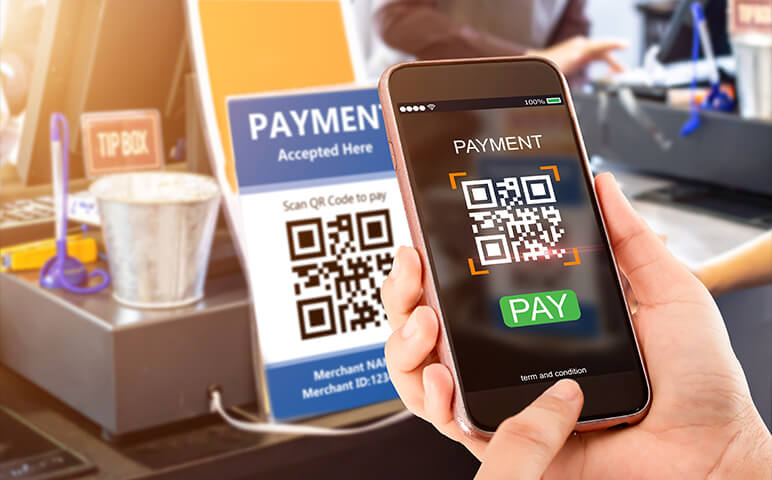
How UPI Credit Line Fees Are Structured
Fee component | What it covers | Who sets it |
Interchange | Compensates the issuing bank for extending credit and carrying default risk | NPCI sets the rate; the issuing bank collects it |
PSP/app commission | Small cut for the app used to initiate payment | Defined within NPCI’s interchange framework |
Acquirer fee | Routing, authorisation, and settlement on the merchant’s side | Acquiring bank |
Platform fee | Gateway infrastructure: routing, fraud checks, dashboards, API access | Set independently by the payment gateway, on top of MDR |
- Customer selects Credit Line at checkout, alongside their linked bank accounts.
- The credit line is triggered. Funds come from the pre-sanctioned limit, not the savings balance.
- The issuing bank authorises the transaction and takes on the credit risk from that point.
- NPCI routes the payment across UPI rails.
- The acquirer settles the merchant side, deducting MDR before crediting the account.
- The merchant receives the net amount.
UPI Credit Line vs Other Payment Methods: A Cost Comparison
UPI Credit Line vs Standard UPI
Parameter | Standard UPI | UPI Credit Line |
MDR | Zero | ~1.3% to 2% |
Platform fee | Applicable (gateway charge) | Applicable |
Government mandate | Zero MDR confirmed | Operates under a market-driven framework without explicit statutory mandates. |
Risk to merchant | None | None (credit risk stays with bank) |
Customer benefit | Instant transfer | Pay later flexibility |
UPI Credit Line vs Credit Cards
Parameter | UPI Credit Line | Credit Card |
Typical MDR range | 1.3% to 2% | 1.5% to 3% |
Infrastructure | UPI rails (NPCI) | Visa/Mastercard/RuPay networks |
Settlement speed | As per UPI settlement cycles | 1 to 3 business days |
Customer adoption | Rapidly growing | Mature, but plateauing |
POS hardware required | No | For offline merchants |
Chargeback risk | Lower | Higher |
UPI Credit Line vs BNPL
Parameter | UPI Credit Line | BNPL |
Provider | Regulated banks | Mostly fintechs |
Regulatory oversight | Strong (RBI) | Still evolving |
Merchant fee model | Structured MDR | Often higher; varies by platform |
Consumer trust | High | Moderate |
Credit risk model | Bank-led | Platform-led |
A Real-World Example
Item | Amount |
Transaction value | ₹5,000 |
Total MDR (1.3%) | ₹65 |
Issuing bank (interchange) | ~₹59 |
UPI app commission (~0.08%) | ₹4 |
PSP/gateway | ~₹2 |
Merchant receives | ~₹4,935 |
Factors That Affect How Much You Pay
- Merchant Category Code (MCC): Risk classification of your business type.
- Transaction value: Larger transactions may attract different rate tiers.
- Monthly transaction volume: Higher volumes create negotiation leverage.
- PSP or gateway relationship: Rate agreements vary significantly by provider.
- Risk profile: High chargeback histories push fees up.
- Bank partnerships: Some banks offer better rates to their own business customers.
Challenges and Hidden Costs to Watch
- Stacked fees: Gateway platform fees sit on top of MDR. Always ask for the full fee breakdown, not just the MDR headline number.
- GST on fees: Payment gateway charges attract 18% GST, which doesn’t always get foregrounded in pricing conversations.
- Variable bundling by provider: One PSP might quote 1.3% MDR + 0.3% platform fee as separate lines; another bundles it. Compare the total cost of the transaction, not individual components.
- Merchant opt-outs: Some small merchants have quietly stopped accepting credit-linked UPI payments to avoid MDR. That’s a valid call, but it carries the risk of pushing credit-ready customers toward competitors who do accept it.
The Regulatory Landscape Shaping UPI Credit Line Fees
- RBI’s 2023 directive gave banks formal permission to link pre-approved credit lines to UPI accounts.
- For small merchants, UPI payments up to ₹2,000 incur no MDR and earn a 0.15% incentive on the transaction amount. If the transaction exceeds ₹2,000, MDR remains zero, but no incentive is provided.
- While UPI transactions for large merchants remain subject to zero MDR, government incentives are available only for eligible small merchants. Large merchants do not receive incentive payouts, regardless of the transaction value.
- Reuters reported in early 2025 that officials from the NPCI, RBI, and the Finance Ministry were discussing a potential 0.2% to 0.3% MDR for large merchants on standard UPI. As of mid-2025, this hasn’t been implemented; the Finance Ministry has confirmed that zero MDR remains in force for standard UPI.
Best Practices for Merchants to Manage UPI Credit Line Fees
- Negotiate before you sign. MDR isn’t fixed, particularly for larger merchants. Push for the full fee schedule in writing regarding MDR, platform fees, GST implications, and volume tiers.
- Use it selectively at first. UPI Credit Line earns its MDR on high-value transactions where credit availability drives conversion. For sub-₹500 purchases, standard UPI is still the right tool.
- Track costs at the transaction level. Looking only at total settlements masks what’s happening by payment method. Break it down. Know exactly what UPI Credit Line costs versus what it contributes.
- Evaluate PSPs on total cost, not headline MDR. Lower MDR from a gateway with poor success rates and no automation will cost more in operations than the rate difference saves. The full picture matters.
- Choose cost-effective solutions without compromising on quality, backed by lifetime after-installation support. Credit-linked payment infrastructure has moving parts because ongoing support isn’t optional; it’s the baseline.