 Back to blogs
What is VPA (Virtual Payment Address)? A Comprehensive Guide
As technology advances, the easy and safe exchange of finances becomes vital. The way we send and receive money has changed because of the Unified Payments Interface (UPI), and the core of the UPI system is the Virtual Payment Address (VPA). As digital transactions are expanding globally, it is essential to know what VPA is for anybody who wants to understand the world of online payments.From what a virtual payment address is and how to locate a VPA to how it has become a fundamental element of contemporary payments, in this guide, we will cover all that you must be aware of about VPA in UPI. Without further ado, let’s get started.
What is VPA in UPI?
A Virtual Payment Address or VPA is an identifier, just like an email address, that lets one receive and send payments through bank apps without sharing any sensitive information.It is analogous to an email account in the sense that a standard VPA takes the form of username@bankname, thus enabling easier transactions by getting rid of the needed confidential banking information.https://www.youtube.com/watch?v=IKMSFBQfR3I
How Does VPA Work?
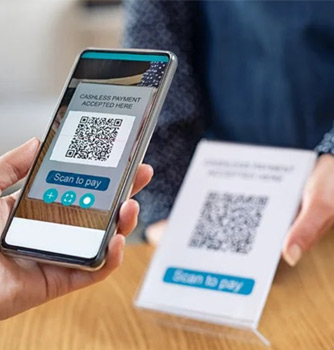
If one wants to initiate a transaction via UPI, instead of the traditional way of sharing one’s bank account number and IFSC code, sharing one QR code or VPA will do the trick. The UPI system is designed in a manner that every QR has a VPA linked, and every VPA is mapped to one or more bank accounts, so sharing a VPA enables safe and quick cash transfers.The process is very secure as there is minimal need for sensitive banking information, which lessens the risk of payment fraud. Everyone is bound to benefit from such promotion of streamlined payments.
What Is a VPA?
VPA is an alphanumeric string representing your bank account’s virtual address. For example, johnsmith@hdfcbank is classified as a VPA.
How to Find Your VPA?
To locate your VPA, follow these steps:
- Launch/Open Your UPI App: Open the UPI app linked to your bank account.
- Go to Profile or Settings: Search for “Profile,” “Settings,” or “My Account”.
- Check Your VPA: Your UPI ID or VPA should appear towards the top; it is usually in the form yourname@bankname or yournumber@bankname.
You can also check the help section of your bank’s app or contact their customer service to assist you in retrieving the information if there are issues.
VPA versus UPI ID: Which is Which?
People often get stuck on whether a VPA and a UPI ID are two separate things. They’re not. A VPA, or Virtual Payment Address, is the broader term used in real-time payment systems around the world. In India, the same idea shows up as a UPI ID, which acts as the user’s unique address for sending and receiving money (like priya@icici). Different apps label it differently, which is why the two can feel unrelated even though they serve the same purpose.
| Term | Definition | Example |
| VPA | Unique ID for UPI transactions | priya@icici |
| UPI ID | Same as VPA, used interchangeably | priya@icici |
VPA in Banking and Payment Systems
The VPA serves as a vital element in completing digital banking transactions. VPA serves as a stand-in for bank account information, enhancing security while streamlining payments. With VPA, financial institutions and payment service providers are able to grant their users a more effortless and safer way to process transactions.
Why is VPA Important in the Digital Payment Era?
The importance of VPA with regards to digital payments includes the following:
- Advanced Protection: Passing on sensitive bank information is no longer necessary, lowering the chances of getting defrauded.
- User-Friendly: Transactions are conducted effortlessly through catchable identifiers.
- Flexibility: Enables different banks and payment service providers to transact easily.
- Instant Payment: Improves speed by allowing money to be sent instantly.
These considerations improve the protection and simplicity of making electronic payments.
Benefits of Using a Virtual Payment Address
There are numerous reasons for using VPA:
- Privacy Protection: Keeps bank account details confidential during transactions.
- User-Friendly: Simple process of sending and receiving funds.
- Convenience: A single UPI app can hold several bank accounts, and a VPA doesn’t have to be limited to just one of them. Many apps now let you link multiple accounts to the same VPA, with one marked as the primary account for outgoing payments. If you prefer more separation, you can still create additional VPAs, but it’s no longer a hard rule that one VPA equals one account.
- Individual Identification: VPAs can often be personalized (e.g., mybusiness@upi, john.doe@hdfcbank) for easier recognition or professional use. However, the level of customization depends on the bank or UPI app; some allow only predefined formats like mobilenumber@upi or name@bankname, while others offer more flexibility.
These advantages make VPA an essential feature of modern digital payments.
Common Issues with VPA
Although VPA enables an easy and convenient payment experience, users may face the following difficulties:
- VPA Entry Errors: Failing to enter the correct VPA details can result in misplaced or failed transactions, especially when the VPA is long.
- Inactive VPA: Sending funds to a VPA that doesn’t exist or is not currently active.
- Numerous VPAs: Having multiple VPAs from different service providers can be challenging to manage.
- Creates friction: Customers prefer to scan a QR or simply pay to a mobile number/ contact rather than entering a VPA, which is cumbersome.
As we conclude, let’s hope that most of your questions, like what VPA is in payment and what is VPA ID are cleared. As all said, be it a consumer utilizing UPI or a merchant using Payment Gateway Solutions, VPA is used to make secure payments.
Conclusion
From types of electronic payment systems in e-commerce to everyday e-payment methods, all have contributed in some way to how we do transactions. The various forms of online payment, be it swiping a card, tapping a phone, or UPI payments, make life easier.
FAQs?
Open your UPI app, go to Profile or Settings, and check for UPI ID or VPA (e.g., yourname@bankname).
2. Is VPA and UPI ID the same?
Yes, VPA and UPI ID are identical and serve as unique identifiers for UPI payments.
3. How do I simply create a VPA?
You don’t create a VPA on its own. When you link your bank account in any UPI-enabled app, the app either generates a VPA for you or gives you the option to choose a custom one during that setup. Once the account is linked and the VPA is confirmed, you can start using it for UPI transactions.
4. What is an example (format) of VPA?
A VPA format typically looks like john123@bankname or mobilenumber@upi.